Event Recap | Keeping it Human: AI-free Spaces
AI-generated content can feel inescapable. From social media feeds and music streaming services to online marketplaces and digital communities, it seems as though our information ecosystem has become saturated with synthetic content.
This trend is driving demand for spaces that prioritize human creativity. Some companies are experimenting with proof-of-humanity requirements and restricting AI-generated content. Others are introducing tools that allow users to reduce the amount of AI-generated content they encounter. Across industries, creators and audiences are seeking greater transparency about how content is made.
We hosted a conversation on the emerging movement toward safe havens for human creativity and AI-free spaces; the role of Content Credentials in supporting transparency and authenticity; and the technical, social, and philosophical questions that arise when defining what "human-created" means as AI becomes increasingly pervasive.
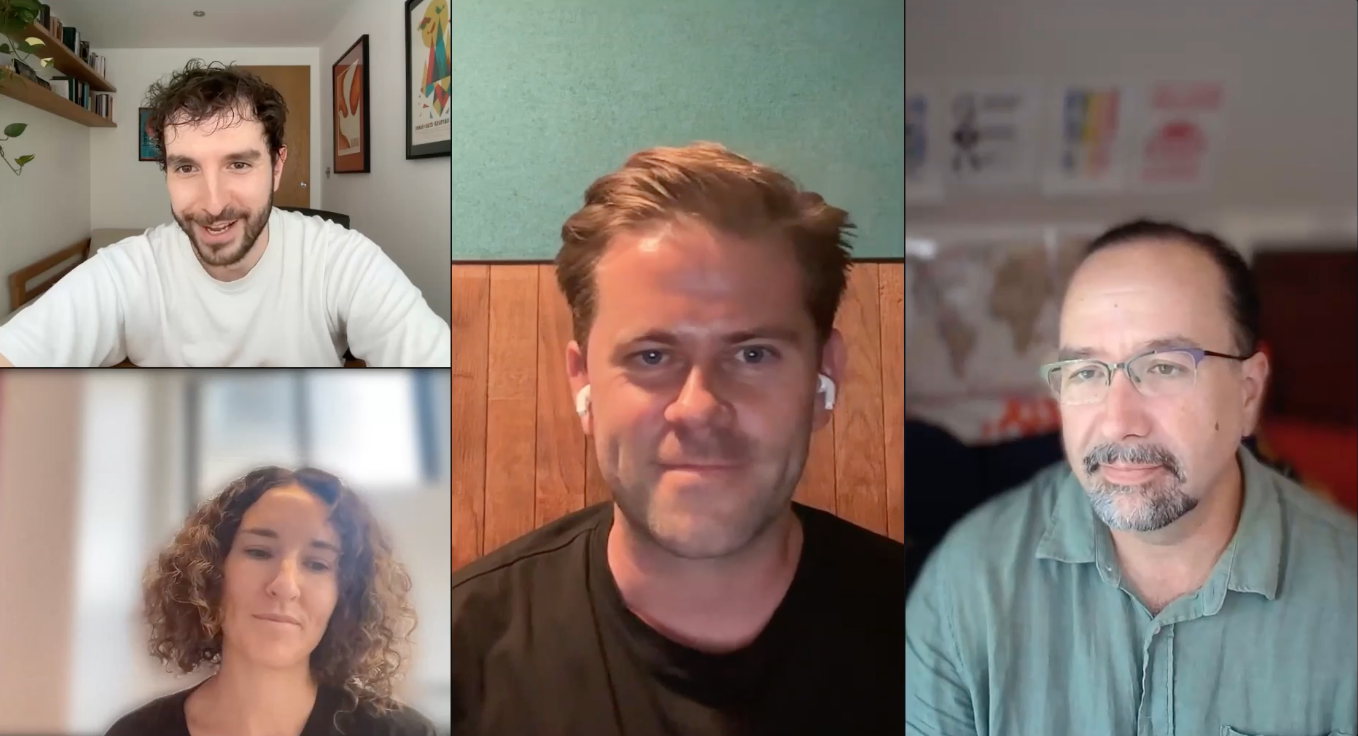
Henry Ajder, CAI advisor and Founder of Latent Space Advisory, moderated a discussion with three guests who are working at the intersection of these questions.
Nathan Freitas, Director of Reality at Proofmode, spoke about how C2PA Content Credentials are being embedded into Divine, a short-form video platform co-created with Jack Dorsey that has the explicit goal of guaranteeing that content comes from real humans. Freitas described how Proofmode helped architect Divine's trust model to verify that content originates from a real device running trusted software. He also discussed the Creator Assertions Working Group (CAWG) metadata standard as a complement to C2PA's device-level verification, giving creators a way to assert their identity and embed do-not-train guidance in their work.
Sarah Rapp, Group Product Manager for Behance at Adobe, brought a different perspective. Rather than restricting AI, Behance's approach centers on transparency about how content is made. Content Credentials, she explained, are central to surfacing the difference between AI-assistive tools, which many professional creators find helpful, and generative AI tools, which can produce content from prompts alone. Her live demo showed how the Content Credential on a Behance project can reveal whether an image was AI-edited, AI-generated, or made without AI tools at all. Her demo also showed how that credential can provide verified identity information through an integration with LinkedIn. The goal, she said, isn't for Behance to act as arbiter of what's good or acceptable, but to give creators the tools to be transparent and audiences the information to make their own judgments.
Stu Rogers, Co-Founder and CEO of Spread, a platform that verifies that readers are human, spoke from the perspective of the information economy. He described Spread as being built around an embedded, anonymous, biometric proof-of-humanity layer that ports verification to partner publications, allowing them to measure and eventually monetize proven human traffic. His core argument was that, as bot traffic has overtaken human traffic online, proven human engagement is becoming a scarce and premium signal. He predicted that within one to two years, advertisers will begin requiring proof-of-humanity verification, which will fundamentally reshape how the open web is monetized and accelerate adoption of human verification layers across the internet.
Watch the full conversation below.